第六届“用英语讲中国故事大会” 初级/城市阶段朗诵参考篇目和图书介绍

综合
关注
选手可在《用英语讲中国故事》提高级或“故事里的中国”系列(《陕西:中华文明的肇始之地》、《湖南:惟楚有才,于斯为盛》、《上海:兼收并蓄的活力之都》、《天津:渤海明珠 魅力之都》)中任选篇目和段落完成朗诵作品。
1. 中国风物Chinese Cultural Icons
泰山 登泰山而小天下Mount Tai: Mountain of All Mountains
--《用英语讲中国故事》(提高级)P25-28
Confucius and his disciple set out from the east route, heading north after passing the One Heaven Gate. Soon the path grew rugged. Confucius slowed his steps, breathing heavily. Each step became harder than the last.
“Master, maybe you should rest,” his disciple said. “We don’t have to reach the top.”
Confucius looked back at the long road they had traveled and replied earnestly:
“Do you see? This road is like life itself—filled with thorns and bumps. I have faced rejection and denial many times, but I have never given up or lowered my expectations. We must reach the summit!”
The disciple, moved by his determination, said no more.
At last, they reached the peak. Looking out over the rolling sea of clouds, Confucius exclaimed:
“Only by climbing Mount Tai can one see the world so small beneath! Now pain and hardship seem insignificant. Standing high allows us to see far, to broaden our vision, and to expand our hearts. Now I understand why emperors and kings held their ceremonies here.“
孔子与弟子从东路出发,过了一天门后向北行进。很快,道路变得崎岖难行。孔子放慢了脚步,气喘吁吁,每走一步都愈加艰难。
弟子劝道:“老师,也许您该歇一歇,我们不一定非要登上顶峰。”
孔子回望走过的长路,郑重地回答:
“你看,这条路就像人生,布满荆棘与坎坷。我在周游列国时,屡遭拒绝和否定,但从未放弃,也从未降低志向。我们一定要登上顶峰!”
弟子被他的坚定打动,沉默不语。
终于,他们到达了山顶。极目远眺,翻滚的云海尽收眼底。孔子感慨道:
“唯有登上泰山,才能看见天地之渺小!此刻艰辛与痛苦都显得微不足道。居高才能望远,才能开阔胸襟、拓展眼界。我终于明白,历代帝王为何要在此举行大典了。”
2. 中国习俗 Chinese Customs
元宵节 元宵猜灯谜The Lantern Festival: Day for Solving Riddles
--《用英语讲中国故事》提高级 P37-40
Early on the evening of the Lantern Festival, when people were gathering on the streets, Wang Shao managed to draw a crowd, including the village patriarchs, to the evil local landlord’s door. More and more people came, talking and yelling.
The landlord, nicknamed <“Laughing Tiger,”> could not sit still inside. Finally, he stormed outside, only to hear Wang Shao reading aloud a limerick written on the lantern he was carrying:
“A pointy head and a skinny white body, this thing weighs less than a gram. Its eye grows on its butt, and it knows only what you wear and not what you are.”
“Everyone, guess what it is!” Wang repeated.
The crowd burst out laughing, casting contemptuous looks at the <brass beast> on the landlord’s door. Even the patriarchs could not help but laugh.
The landlord perceived the sarcasm but dared not act. “How dare you insult me!” he shouted.
“Sir, I only gave you a riddle,” Wang replied. “The answer is simply ‘a needle.’ Surely you misunderstood.”
The landlord, unable to retaliate, left in disgrace while the crowd cheered. Thus, lantern riddles became a beloved festival custom.
元宵节的傍晚,街上热闹非凡。王少带着一盏花灯,把族里的长老们和乡亲们都引到了恶霸地主“笑面虎”的家门口。人群越聚越多,议论声此起彼伏。
“笑面虎”气冲冲走出屋子。只见王少举着花灯,高声念起上面的打油诗:
“头尖身细白如银,称称没有半毫分。眼睛长到屁股上,只认衣裳不认人。”
说完,他又喊道:“大家快来猜一猜是什么?”
人群哄堂大笑,连族里的长老们也忍不住笑了出来。
地主听出其中讥讽,却又不敢发作,只好恼羞成怒地吼道:“你敢羞辱我!”
王少不慌不忙地答道:“老爷,我只是出个灯谜而已,谜底不过是一根针罢了,您可误会了。”
地主无言以对,只得灰溜溜地走开,人群顿时爆发出一片欢呼。自此,猜灯谜便成了元宵节的风俗之一。
3. 中国人物 Chinese Sages and Great Figures
诸葛亮 忠诚智者诸葛亮 Zhuge Liang: Much More Than Just Wit
--《用英语讲中国故事》提高级 P111-113
Zhuge Liang once appointed Ma Su to guard Jieting, but the position was soon taken by Sima Yi and his 150,000 troops, who then marched straight toward Xicheng, where Zhuge Liang was based. At that time, he had no army by his side, only civil officials. Everyone panicked—should they flee the city or fight to the death?
But Zhuge Liang remained calm. He ordered all flags to be hidden, and had his soldiers change into civilian clothes, sweeping the streets as if nothing had happened. As for himself, he put on a robe, tied his head scarf, and with two young attendants beside him, sat on the city wall burning incense and playing the zither.
When Sima Yi’s army arrived, they saw the wide-open gate, no signs of panic, and Zhuge Liang sitting serenely. Sima Yi thought to himself: “Zhuge Liang is famous for caution and cunning. If he dares wait so calmly, surely there must be a massive ambush inside.” Not daring to risk it, he ordered a retreat.
Thus was born the famous “Empty Fort Strategy,” proof of Zhuge Liang’s wisdom and courage.
诸葛亮曾派马谡镇守街亭,但不久便被司马懿率十五万大军夺下,随后直逼诸葛亮所在的西城。当时,诸葛亮身边并无精兵,只有一些文官。众人惊慌失措——是该弃城逃走,还是拼死一战?
然而诸葛亮却神色自若。他下令将城中旌旗全部藏起,又让士兵换上百姓衣装,悠然自在地在街头洒扫,好似毫无异状。至于他自己,则身着道袍,头束纶巾,带着两名随从,安然坐于城楼之上,一边焚香,一边抚琴。
司马懿大军赶到,见城门洞开,城中不见慌乱,诸葛亮却端坐城头,神情泰然。司马懿暗自思忖:“诸葛亮一向谨慎多智,如今竟敢如此镇定,城中必有重兵埋伏。”于是心生疑惧,不敢冒险进攻,下令全军退去。
由此便有了著名的“空城计”,成为诸葛亮智慧与胆识的绝佳写照。
4. 中国成就 Chinese Achievements
石墨烯 石墨烯的自述Graphene: Graphene Comes of Age in China
--《用英语讲中国故事》提高级 P236-238
I am graphene, a new two-dimensional nanomaterial made of carbon atoms. Humans have long needed me, but for more than ten years I was difficult to obtain. Mechanical exfoliation, redox, epitaxy,vapour deposition – all these methods required high costs, produced only tiny amounts, and the quality was hard to control. I had great potential, but no chance to serve humanity.
Then, one day, Chinese scientists rescued me. They improved the vapor deposition method, using molten copper as a catalyst and adding a blowpipe. At high temperatures, I obediently spread across the copper bubbles, greatly increasing the surface area and efficiency. After cooling, I could be easily separated by a simple stream of air. With this method, about nine 9 grams of me could be produced in just one hour – while the old method couldn’t even produce a gram. My price dropped to just a few yuan per gram, with far better quality.
Thanks to Chinese scientists, I finally entered real life, becoming a rising star in the field of new energy.
我是石墨烯,一种由碳原子组成的新型二维纳米材料。人类早已需要我,但在十多年里却难以获得。机械剥离、氧化还原、外延、生长、气相沉积——这些方法不是成本高昂,就是产量极少,而且质量难以控制。我潜力巨大,却始终没有机会真正服务人类。
直到有一天,中国科学家拯救了我。他们改进了气相沉积法,以熔融铜为催化剂,并加入喷吹装置。在高温下,我乖巧地在铜泡表面铺展开来,大大增加了反应面积和效率。冷却后,只需一股气流就能将我轻松分离。用这种方法,一个小时就能生产约九克石墨烯,而旧方法连一克都难以得到。我的价格骤降至每克仅几元,而且品质更佳。
多亏了中国科学家,我终于走进现实生活,成为新能源领域冉冉升起的新星。
5. 中国艺术 Chinese Arts
《黄河大合唱》慷慨激昂的抗战之歌The Yellow River Chorus: A Wartime Song That United Us All
--《用英语讲中国故事》提高级P298-301
Late at night, as Xian Xinghai composed The Yellow River Chorus, the phrase “We cherish peace, but never at the cost of humiliation and bullying!” lingered on his lips.
Visions filled his mind: the sunburnt faces of boatmen, rising and falling in the waves, yet firm and unyielding—escorting the Eighth Route Army across the river. Hukou waterfall, torrents of muddy water plunging from the cliffs, crashing with fury, roaring like a voice condemning the invaders. Children weeping under bombardment… soldiers charging with only broadswords… the three hundred thousand souls lost in the Nanjing Massacre.
He drew a deep breath, as though he could smell the riverbank soil—thick with the scent of blood. He closed his eyes. The Yellow River seemed to seep into his heart—cold to the touch, yet burning like fire within.
Tears came unbidden. Words were useless. Only music could carry the weight of his grief and anger. And so he poured everything into the score, hammering sorrow and indignation into every note.
“Gales howling, horses neighing, the Yellow River roaring, roaring…” His rage burst out like Hukou’s torrent, pounding onward.
深夜,冼星海在创作《黄河大合唱》,嘴里低声念着那句话:“我们热爱和平,但绝不能任人欺凌!” 一幅幅画面在他脑海中浮现。
他仿佛看见那些被烈日晒黑的船夫,随波起伏,却依然坚毅不屈——护送着八路军渡河。
他仿佛看见壶口瀑布,滚滚浊流从悬崖倾泻而下,怒吼咆哮,在控诉侵华日军的罪行。
他仿佛听见轰炸下哭喊的孩童,冲锋陷阵、手握大刀的战士,以及南京大屠杀中三十万无辜的亡灵。
泪水不由自主地涌出。言语已无力表达,唯有音乐能承载他胸中汹涌的悲愤。于是,他将全部的情感倾注在《黄河大合唱》的乐谱里,把愤怒与哀痛锤进每一个音符。
“风在吼,马在叫,黄河在咆哮、咆哮……” 他那不可抑制的怒火迸发,如壶口瀑布般奔腾轰鸣。
6. 中国精神 Chinese Spirit
工匠精神干活要凭良心The Spirit of Craftsmanship: Let Your Conscience Be Your Guide
--《用英语讲中国故事》提高级 P359-361
It was late at night. The world outside was silent. After checking the last set of data, Hu Shuangqian — senior technician and “aviation craftsman” at the Shanghai Aircraft Manufacturing Corporation — finally took off his glasses and lay down, exhausted. He could have fallen asleep the moment his head touched the pillow.
But he didn’t. Out of habit, he replayed the day in his mind. “This afternoon,” he murmured, “I put the screws on the plane… set the safety… installed the parts...”
His wife, half-asleep, turned over. “Safe, safe, safe,” she muttered. “That’s all you ever think about. Just sleep.”
“Yes, in a second. Wait—the safety!” Hu sat up in alarm. “Did I reset it? Could I have forgotten?”
“You never forget,” his wife sighed.
But Old Hu shook his head. “No. I have to check. Otherwise, I won’t sleep.”
And so, at three in the morning, he rose again. For him, safety was never just a detail, but a matter of conscience. As his mentor taught: “Skill springs from character. Let your conscience be your guide.”
夜深人静。胡双钱——上海飞机制造厂的高级技师,人称“航空工匠”,在核对完最后一组数据后,终于摘下眼镜,疲惫地躺倒在床上。他累极了,本该一沾枕头就能入睡。
出于习惯,他开始在脑海里回放白天的工作。“今天下午,我拧紧了螺丝……上了保险……安装了外部零件……”
半睡半醒的妻子翻了个身,嘟囔道:“上保险上保险,你整天就想这些。快睡吧,肯定没问题。”
“嗯,嗯,马上。等等——保险!”胡双钱猛然坐起,心头一紧,“我是不是忘了复位?”
“你从来不会忘的。”妻子叹了口气。
可老胡却摇了摇头:“不行,我得去看看。不然今晚我一刻也睡不踏实。”
于是,凌晨三点,他又起身返厂。他始终谨记师傅的教诲:“技艺源于品格,干活要凭良心。”
7. [陕西·风物]大雁塔 玄奘西行 Dayan Pagoda: Master Xuanzang and His Pilgrimage Westward
--《陕西:中华文明的肇始之地》(英文版)P17
Xuanzang, born Chen Yi, showed a passion for Buddhism from childhood. At thirteen, he became a monk in Luoyang. Gifted and diligent, he soon mastered Buddhist theory. But he also noticed contradictions among schools of thought. Since the scriptures were in Sanskrit, repeated translations had created errors. Determined to seek the truth, Xuanzang resolved to journey to India, the birthplace of Buddhism.
At that time, the Tang court forbade private travel abroad. India was unimaginably far, the route filled with snowy mountains and endless deserts. Few could survive such a journey. Yet Xuanzang’s resolve was unshakable. He endured countless hardships and finally reached Nalanda, the great Buddhist sanctuary.
There, he overcame language barriers, studied tirelessly, and humbly sought guidance from the masters. His understanding deepened day by day.
After seventeen years traveling in the Western Regions, Xuanzang returned to Tang China. To preserve the scriptures he had brought back, Emperor Gaozong ordered the construction of a great brick pagoda at Da Ci’en Temple. This became the Great Wild Goose Pagoda, where Xuanzang translated texts, leaving a legacy that inspires to this day.
--《陕西:中华文明的肇始之地》(中文版)P13
玄奘,俗名陈祎,自幼便对佛学深感兴趣。十三岁时,他在洛阳的寺庙出家。他天资聪颖,勤奋好学,不几年便掌握了佛教的理论体系。但他逐渐发现,不同流派之间常常存在分歧。由于佛经原文是梵文,经过多次翻译难免出现差错。为探求真理,他立志远赴佛教发源地——印度。 当时唐朝朝廷严禁私自出境,而印度又遥不可及,途中需跨越雪山与荒漠,即便获准,也鲜有人能抵达。然而玄奘的决心坚如磐石,历经千辛万苦,终于抵达佛教圣地——那烂陀寺。
他克服语言障碍,潜心钻研,虚心向大师求教,对佛法的领悟日益精深。在西域17年后,玄奘终于返回大唐。为了妥善保存他带回的佛经,唐高宗下令在大慈恩寺建造了大雁塔。玄奘在此继续译经,留下了宝贵的精神遗产。
8. [陕西·人物]陈忠实 白鹿原上的鲜活文学Chen Zongshi:Life and Literature on the White Deer Plain
--《陕西:中华文明的肇始之地》(英文版)P136
Legend tells that after the fall of the Western Zhou Dynasty, King Ping of Zhou saw a white deer as he moved the capital east to Luoyi. From that moment, the land became known as White Deer Plain.
Centuries later, in Jiang Village, on this very plain, writer Chen Zhongshi discovered old county records. One thick section was dedicated to “widow chastity.” Page after page told the same story: young wives, their husbands gone too soon, condemned to serve their in-laws, raise children alone, and never remarry. Their “loyalty” was marked only by “Chastity Arches” — stone monuments to a lifetime of confinement.
Chen read with rising sympathy and indignation. How many vivid lives were bound by cruel moral codes that denied them even the right to choose their fate? All they received was a line in the archives, or a lifeless arch of stone.
It was then that Chen’s vision for White Deer Plain began to take shape — a novel to tell the story of a village, and to give voice to those whose cries had long been buried by history.
--《陕西:中华文明的肇始之地》(中文版)P114
传说西周灭亡后,周平王东迁洛邑途中看见一只白鹿,从此这片土地便被称为“白鹿原”。
几个世纪后,在白鹿原上的蒋村,作家陈忠实偶然翻阅到地方县志,其中厚厚的一部分记录着“寡妇守节”。一页又一页,几乎都是相同的故事:年轻的妻子们,丈夫早逝,被迫终生守在婆家,抚养子女,永不再嫁。后来,她们的忠贞被立起“贞节牌坊”来表彰。
陈忠实读着这些记载,心中涌起同情与愤慨:多少鲜活的生命,被苛刻的道德准则禁锢,连自己的命运都无权决定?换来的只是在县志上的几行文字,或是一座冰冷的石牌坊。
正是在那一刻,《白鹿原》的构想开始萌生。这部小说不仅要讲述一个村子的故事,更要替那些被历史尘封的痛哭发声。
9. [湖南·习俗]辣椒在湖南 它不只是道菜Chili Peppers in Hunan: More Than Just a Dish
--《湖南:惟楚有才,于斯为盛》(英文版)P57
In Hunan, chili peppers are more than just food — they are a way of life. As a local folk song says: “Don’t laugh, distant guests, the Hunanese love chili peppers best.”
In Hunan, wherever there is a vegetable plot, there will be chili peppers. At harvest time, families hang them out to dry, pickle them in jars, or grind them into sauces. And when mealtime comes, the fiery aroma fills every kitchen. Oil sizzles in the wok, peppers tumble in the flames — people sneeze, eyes water — but still, their passion for chili never fades.
They like to say: “No spice, no dish. No spice, no joy.” And even boast: “Guizhou people are not afraid of spice. Sichuan people can endure spice. But we Hunanese don’t fear spice — we fear the lack of it!“
In recent years, near Changsha, a chili-eating contest has become a summer tradition. The rules are simple: finish fifty blazing-hot “heaven-facing” peppers in the shortest time. And almost every year, without surprise, the champions come from Hunan.
Chili peppers in Hunan are not just a flavor — they are an identity.
--《湖南:惟楚有才,于斯为盛》(中文版)P55-56
在湖南,辣椒不仅是一种食物,更是一种生活方式。正如一首民歌所唱:“远方的客人莫见笑,湖南人待客爱用辣椒。”
每到收获季节,人们或把辣椒挂起来晒,或装入坛中腌制,或舂成辣酱。等到吃饭时,厨房里总是弥漫着火辣的香气。热油翻腾,辣椒在锅中跳跃——人们一边打喷嚏、流眼泪,一边依然难掩对辣椒的热爱。
湖南人常说:“无辣不成菜,无辣不欢。”他们甚至自豪地夸口:“贵州人不怕辣,四川人辣不怕,湖南人怕不辣!”
近年来,在长沙附近,每到盛夏,都会举办一场吃辣椒比赛。规则很简单:在最短时间里吃完50个火辣的朝天椒,就能夺冠。而毫无悬念的是,几乎每一年的冠军都来自湖南。
在湖南,辣椒不只是味道,更是一种身份的象征。
10. [湖南·精神]甘于奉献 以平凡铸就伟大的雷锋精神From Ordinary to Extraordinary: The Spirit of Lei Feng
--《湖南:惟楚有才,于斯为盛》(英文版)P176-177
Lei Feng was born in Changsha in 1940, amid war and corruption. Within years he lost nearly his whole family—grandfather to debt collectors, father to the Japanese army, brothers to labor and hunger, mother to despair. By seven he was an orphan.
In 1949 New China’s founding changed his life: housing, land, schooling. After elementary school he said, “I shouldn’t increase the burden on the country anymore. I want to work and repay society.”
He became a county correspondent, then an Ansteel worker, earning over twenty honors. In 1960 he joined the PLA. Though he lived simply—patching his socks—he donated his savings to flood relief and communes.
Lei Feng died in an accident at twenty-two. Mao called on the nation to “learn from Comrade Lei Feng.” Since then, every March 5 people honor him with acts of service.
As Lei Feng wrote: “If you are a drop of water, have you moistened an inch of land? If you are a ray of sunshine, have you illuminated a fraction of darkness? If you are a grain of food, have you helped nourish a life?”
--《湖南:惟楚有才,于斯为盛》(中文版)P175
1940年,雷锋出生于长沙,那时战乱与腐败并存,短短几年里,他几乎失去了整个家庭——祖父因债主逼迫而亡,父亲被日军毒打致死,兄长死于劳累与饥饿,母亲则因绝望自尽。七岁时,他已成孤儿。
1949年,新中国成立后,雷锋分到了住房和土地,还免费上学。小学毕业时,他说:“我不应该再增加国家的负担,我要参加工作,回报社会。” 他先后成为县委通讯员、鞍钢工人,因勤奋和奉献获得十多次表彰。
1960年,他光荣入伍,加入中国人民解放军。生活简朴的他,袜子打满补丁,却慷慨解囊,把所有积蓄捐给了灾区和需要帮助的公社。
1962年,年仅22岁的雷锋因公殉职。毛主席号召全国人民“向雷锋同志学习”。那以后,每年的3月5日,中国人都会通过各种志愿服务来纪念他。
11. [上海·习俗]送灶神 年的开始Seeing Off the Kitchen God: The Start of the Chinese New Year
--《上海:兼收并蓄的活力之都》(英文版)P61-62
Every home in ancient China had a stove—and with it, belief in the Kitchen God, who guarded the hearth and reported each family’s deeds to the Jade Emperor.
A legend tells of Zhang Chan, heir to a fortune who cast aside his first wife; later a fire ruined him and left him blind. Begging for food one day, he knocked on a door and found the kind woman inside was his former wife. Overcome with shame, he leapt into her hearth and died. Moved by his repentance, the Jade Emperor made him the Kitchen God.
Each year, on the 23rd day of the last lunar month, the Kitchen God is believed to ascend to Heaven with his report. In Shanghai, families treat this as the year’s beginning. Women lead the rite, pasting couplets by his image—“Speak of good things in Heaven, keep us safe on Earth”—then offering candy to seal his lips, wine to make him drowsy, and sweet treats to sweeten his words.
On New Year’s Eve, families welcome him back with incense and fine food—then sit for the grand reunion dinner to celebrate the New Year.
--《上海:兼收并蓄的活力之都》(中文版)P54-55
在古代中国,每家每户都有灶台,也由此产生了对灶神的信仰。
民间有个著名的传说,说的是富家公子张灿。他抛弃了原配妻子,后来因大火而双目失明、家产尽毁,沦为乞丐。一天,他上门讨饭,没想到开门的好心人正是被自己遗弃的前妻。张灿羞愧难当,纵身扑进灶火中身亡。玉皇大帝得知后,感念他在临终前还能悔悟,于是封他为灶神,主管人间的家家炉火。
从那以后,人们每年都会祭拜灶神。腊月二十三,灶神要升天述职。上海人把这一天当作新年的开端。家中女主人会在灶神像两边贴上对联——“上天言好事,下界保平安”。然后献上糖果、酒和各类甜点,寓意粘住灶神的嘴、让他醉意朦胧,只带好话上天。到除夕夜,家家户户再迎灶神归来,共享团圆的年夜饭。
12. [上海·风物]外滩 万国建筑博览群The Bund: A Display of Architecture from Around the World
--《上海:兼收并蓄的活力之都》(英文版)P19-20
The Bund, on the bank of the Huangpu River, grew into one of East Asia’s most dazzling financial and commercial centers. Banks, newspapers, and chambers of commerce lined the waterfront, and architects rushed to leave their mark.
Among them was George Wilson, just thirty-two when he arrived from London in 1912. His first commission was bold: a skyscraper for the Union Insurance Society of Canton. Wilson refused to play it safe. He designed a building unlike any other on the Bund—six stories tall with a steel frame, an entrance flanked by massive granite columns, and a rooftop crowned with a bell-shaped pavilion. Offices filled the lower floors, while the top offered luxury apartments with gardens and sweeping river views.
When it opened in 1916, the Far Eastern Review praised it as “graceful in the extreme,” and locals soon called it the Youli Building.
But Wilson was only the beginning. Palmer and Turner, Hudec, Poy Gum Lee, and others soon reshaped the Bund with Greek, Gothic, modern, and Chinese styles. Together, they built a skyline where East meets West—and where Shanghai’s spirit shines for the world to see.
--《上海:兼收并蓄的活力之都》(中文版)P16-17
外滩,曾是远东地区最耀眼的金融和商业中心。银行、报社、商会在黄浦江边林立,吸引了大批建筑师渴望在这里留下印记。
1912年,来自伦敦的乔治·威尔逊来到上海,他的第一个任务十分大胆——为保安保险公司设计一座全新、截然不同的摩天大楼。他拒绝循规蹈矩:六层钢架高楼,入口两侧矗立着巨大的花岗岩石柱,屋顶点缀着钟形小阁楼。下层是宽敞的办公空间,上层则是带花园的豪华公寓,可以俯瞰黄浦江的壮丽景色。上海市民更习惯称这栋“优雅至极”的大楼为“有利大楼”。
此后,公和洋行的建筑师们、邬达克、李锦沛等人,相继在外滩挥洒才华——希腊式、哥特式、现代派、融入中国元素的风格,共同构筑起一条中西交融的天际线,让上海的精神向世界闪耀。
13. [天津·艺术]天津戏法 惊艳西方的中国魔术Tianjin Magic: Chinese Illusions That Dazzled the West
--《天津:渤海明珠 魅力之都》(英文版)
“Here comes the magician!” In old Tianjin, this call was enough to fill a village square with excitement. The most famous trick was the Three Gods Assembly—three balls, two bowls, endless variations, performed with lightning hands and playful banter. This “talking while performing” style gave Tianjin magic its special charm.
In the late Qing and early Republic, Tianjin became a golden stage of Chinese magic, producing masters like Zhu Liankui. Born in 1854 with a stutter, he could not rely on witty talk, so he perfected dazzling illusions like spitting streamers, fishing with an empty rod, and restoring shredded paper.
In 1874, aboard a foreign ship in Shanghai, his talent caught the eye of an American businessman. Invited overseas, Zhu carried only a box of props, yet brought Chinese magic to the world. At the Omaha World’s Fair, he performed his “Big Bowl of Flying Water.” With a flourish, he revealed a bowl half a meter wide, filled with water and goldfish. The crowd gasped, and Chinese magic won worldwide fame.
Today, Tianjin magic endures, blending tradition and innovation, with humor, resilience, and cultural confidence.
--《天津:渤海明珠 魅力之都》(中文版)
“魔术师来了!”在旧时天津,这一声喊足以让乡间巷陌充满欢笑与期待。魔术当然不是真的,它的奇妙之处在于精巧的道具和千百次苦练。清末民初,天津成为中国魔术的黄金舞台,涌现出诸如朱连魁这样的大家。他生于1854年,因口吃无法靠“说学逗唱”,便苦练技艺:口吐长绸、空竿钓鱼、碎纸复原,令观众叹为观止。
1874年,他在上海外轮上表演,被一位美国商人看中并邀其远行。他只带着一箱道具,便把中国魔术带到了世界。奥马哈世博会上,他表演了“大碗飞水”,只见他铺开红毯,瞬间显出一只半米宽的大碗,碗中清水翻腾、金鱼游动,观众无不惊叹。由此,中国魔术在海外声名鹊起。
今天的天津魔术仍然享誉国际,不断在传承与创新中焕发活力。
14. [天津·成就]天津港 国际化绿能智慧港口Tianjin Port: A Global Hub of Smart and Green Energy
--《天津:渤海明珠 魅力之都》(英文版)
Ninety-year-old Grandpa Liu, once a dockworker at Tianjin Port, was invited to celebrate seventy years of the New Port. Riding an electric shuttle through the vast grounds, he was stunned— “It feels like another world,” he murmured.
He recalled October 17, 1952, when we first came. “Back then, only a dozen ships docked along the Haihe River. We carried everything on our shoulders. Now the port stretches dozens of kilometers into the sea. It’s beyond imagination! But… where are the dockworkers now?”
A young guide smiled. “Today’s Tianjin Port is smart, automated, and zero-carbon. The workers run machines.” She pointed to electric carriers gliding across the docks, cranes lifting containers with precision, and operators seated calmly in control centers.
Grandpa Liu’s eyes misted. He recalled the coal dust of the past—“White cars drove in, black cars drove out.” Now the skies were clear, the waters blue, powered by clean energy. Tianjin had become the world’s first fully green, smart harbor.
The port of Grandpa Liu’s youth was built on sweat and grit. Today, Tianjin Port sails on innovation and sustainability—a beacon for the future of global trade.
--《天津:渤海明珠 魅力之都》(中文版)
90岁的刘大爷,曾是天津港的装卸工。70年新港庆典之日,他乘坐电动接驳车穿梭在辽阔的港区,惊叹道:“这简直像换了一个世界!”
他仍记得1952年,第一次随父亲来到天津港的情景。“那时,海河边只有10来艘船,全靠人力装卸。如今港区已经延伸几十公里,真是难以想象!可如今工人们都去哪儿了?”
讲解员笑着回答:“今天的天津港是智慧港、零碳港,工人都在操作高科技设备。”电动运输车静静滑过,自动化起重机一键提箱,调度员坐在智能控制中心从容指挥。
刘大爷眼眶湿润,回忆起当年煤炭外运时——“白车进来,黑车出去。”而今煤炭全程封闭运输,天空湛蓝,水面清澈。远处,巨大的风机和光伏板并肩而立,天津港已实现100%清洁能源运行,成为世界首个“风光储一体化”的绿色智慧港。
附件1、朗诵素材范围参考:
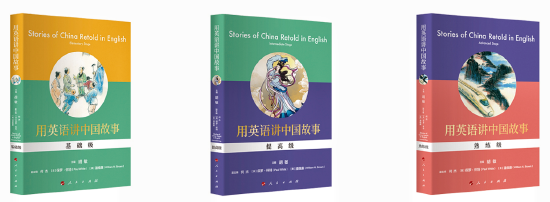
《用英语讲中国故事》丛书由新航道国际教育集团组织国内教育界、翻译界权威专家编写,人民出版社出版。
丛书从中国风物、中国习俗、中国人物、中国成就、中国艺术、中国精神六大领域选择最具中国特色的故事200余个。采用汉英对照形式,帮助青少年中英文阅读和写作能力双重提升。同时,这也是一系列向世界介绍中国的通俗读本。通过阅读丛书,读者可对中国文化概貌有大体了解,真正实现用英语讲好中国故事。The ‘Stories of China Retold in English’ series features over 200 stories that highlight Chinese culture, covering six fields: cultural icons, customs, sages and great figures, achievements, art, and spirit.The series uses a Chinese-English parallel format and is a popular book for introducing China to the world. By reading this book, readers can gain a general understanding of Chinese culture and, in turn, tell Chinese stories effectively in English.
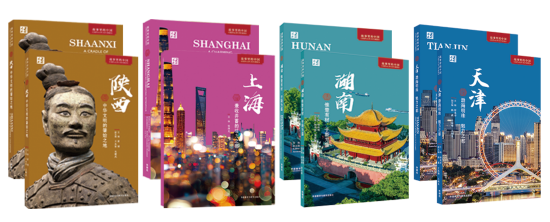
“故事里的中国”丛书由教育部中外语言交流合作中心联合新航道国际教育集团共同策划,外语教学与研究出版社出版。丛书按照中国 34 个省级行政区进行分卷编撰,每卷展示故事50个左右,中英双语出版,面向海内外青少年读者。目前已陆续出版《陕西:中华文明的肇始之地》《湖南:惟楚有才,于斯为盛》《上海:兼收并蓄的活力之都》《天津:渤海明珠 魅力之都》。The “China in Stories” series contains Shaanxi A Cradle of Chinese Civilization, Shanghai A Charming All-embracing Metropolis, Hunan, Home of Talents, Wellspring of Wisdom, Tianjin Pearl of The Bohai Sea, City of Charm.
丛书围绕“地方风物、地方习俗、地方艺术、地方成就、地方人物、地方精神”六大主题,来呈现不同省份独特的历史文化和社会生活。旨在通过“小切口”呈现“大视野”,以更加接地气的方式讲好每个省的故事,既展现具有地域特色的中华传统文化,又反映新时代风貌和中国各地区各领域的发展成就。用融通中外的语言展现可信、可爱、可敬的中国形象,帮助广大青少年了解家乡、热爱家乡、推广家乡.The series is co-planned by the Center for Language Education and Cooperation and New Channel International Education Group, and co-authored by experts from China, the UK, and the US. Using small snapshots to reveal the bigger picture, it shares deeper philosophies through simple stories. Centered on six themes—scenery, customs, art, people, achievements, and spirit—the series highlights features of China’s 34 provincial-level regions and showcases the richness, depth, and vibrancy of Chinese culture.
如需购买图书请前往CN Stories小程序[首页-我的]页面领取优惠券购买图书,图书均含所有文章对应音频。If you need to purchase books, please go to the “Home - My Profile“ page of the CN Stories mini-program to claim the coupon and buy books. All books include the corresponding audio of all articles.